Discourses From the East


This piece sat unfinished for months. Written in the immediate aftermath of Zubeen da’s passing, it felt too raw, the emotions still unsettled and unprocessed. There was hesitation about whether speaking would deepen understanding or add to the familiar swell of commentary. Recent incidents, however, made returning to these pages seem necessary.
When Zubeen Garg passed away in September 2025, influencers across the country briefly turned their their gaze towards Assam with bemused fascination. Reels multiplied, gained massive traction, tributes poured in, and a cultural icon long central to many in the state was suddenly “discovered” by audiences who had scarcely engaged with his work before. In the viral afterlife of these reels, produced by a lot of creators from outside the region, a familiar pattern resurfaced.
The Northeast has long been folded into the national imagination through selective frames that render it legible only in fragments. It moves through cycles of hypervisibility and neglect that answer to the needs of those looking in, not those who live here.The region surfaces in national consciousness mainly at the edges: after tragedy, amid conflict, or in fleeting celebration when a medal is won by a sportsperson or a film earns international acclaim.
The Erasure by Design
The nation has not forgotten the Northeast; it has repurposed it. The region’s histories and ways of being have been absorbed into narratives that secure authority rather than unsettle it. For two centuries, competing projects of control have converged in a steady practice of co-option and subordination. The effect is to render the Northeast legible on others’ terms, easy to govern, theorize, and extract from while escaping accountability and foreclosing genuine engagement.
Living in resource-rich areas has profoundly shaped the political economy and the society here. Yet this abundance has not translated into local prosperity or meaningful control, except for a narrow section of the elite. This has certainly given rise to a class that maintains its power through proximity to decision-making centers in the national capital and through alliances with resource capital. This class has also largely set the terms of public discourse and made decisions for the broader population across the states of the region, often with little accountability to those most affected.
The region continues to be imagined as a place rich in resources that local communities either cannot or will not utilize. This framing justifies continued extraction while denying indigenous peoples agency over their own lands and wealth. Such activities have been linked to extensive deforestation, water pollution, and toxic discharge into rivers, fundamentally altering the relationship communities have long maintained with their environments.
Meanwhile, Assam is often treated as distinct from the rest of the Northeast by observers, without recognition of how capital flowed and how resource extraction have reshaped its social and political landscape. Many indigenous communities in Assam lack comprehensive constitutional safeguards till date, except in the hill districts and the BTR, and State in partnership with big capital has left the question of extending protections unresolved for decades. If parts of the NE region appear too “mainland-like,” they are often considered less in need of constitutional protections, yet when such protections are demanded or defended, they are readily characterized as regressive, or exclusionary towards other citizens.
What remains systematically ignored is the region’s colonial history, the enduring impact of cultural and social hegemonies imposed by more dominant neighbors to the west, and the physical and psychological costs that followed. The violence embedded in plantation economies, demographic transformations, linguistic impositions, the militarization of everyday life, and the environmental degradation produced by decades of unregulated extraction are not peripheral episodes but foundational realities. They remain absent from dominant narratives precisely because acknowledging them would unsettle the simplified frameworks through which the Northeast is seen, administered, controlled and understood.
Everyday Racism, Enduring Impunity
Several incidents in the brief aftermath of those viral reels and posts revealed how conditional the acceptance of indigenous peoples remains. As people across the state were navigating collective grief after September 19, a young woman posted a video expressing bewilderment that an entire state could suspend regular activity over a musician’s death. She speculated that perhaps this explained why people here are “uneducated” and appeared “jobless.” Her inability to comprehend the collective pause exposed the hegemony of a logic that cannot imagine ways of life not organized around productivity metrics and market rationality.
About a month later, a dispute between a local Dimasa woman and migrants from Bihar escalated amid questions about land ownership in a Sixth Schedule area, and the video circulated widely. The commentary that followed on social media described indigenous peoples as lazy, arrogant, and uncivilized. Their supposed “unwelcoming behaviour,” invoked with thinly veiled contempt, was presented as the reason the Northeast remained developmentally backward, as though demands over land and rights were evidence of cultural deficiency rather than political history.
During roughly the same period in Karbi Anglong, a Marwari Yuva Manch publicly defended maintaining separate cremation grounds for vegetarians, referring to the grounds used by non-vegetarian communities as gandagi, as filth. This was not merely about dietary preference but about importing and imposing a caste hierarchy onto indigenous communities whose relationships with food, land, and death have never operated within Brahminical frameworks of purity. The relationship indigenous communities maintain with meat, fish, and fermented foods is not a matter of lack of ‘refinement’ or ‘civilization’, it is integral to ecological knowledge, seasonal rhythms, and cultural identity.
It was also then that news emerged of Angel Chakma, a young boy from Tripura who was beaten in Uttarakhand with knives and metal rods while racial slurs were hurled at him and his brother. He endured seventeen days of suffering before dying in Dehradun. A decade earlier, it had been Nido Tania, killed in Delhi after being mocked for his appearance. The M. P. Bezbaruah Committee was constituted in response, recommendations were drafted, and amendments and measures to address racial discrimination were outlined. Yet Angel Chakma’s death makes clear how little has changed. The violence persists, and young lives from the Northeast continue to be treated as expendable in cities across mainland India. The question that remains is how many such deaths must occur before this is acknowledged not as a series of isolated incidents but as a pattern of dehumanization the nation has refused to confront.
More recently, in Delhi’s Malviya Nagar, three Arunachali women were verbally assaulted by neighbours in an altercation that escalated into racial abuse. They were called gutter-chaap, told to go and sell momos, labeled dhandhewali, and accused of running massage parlors. “Northeast people are shit,” the abusers declared, as one invoked her husband’s status as the son of a customs officer and politician to assert impunity. The language of insult was inseparable from assumptions about occupation, morality, and worth.
Cultural consumption, love for music, or the urge to travel to these places poses no threat; it does not necessarily require structural reckoning. It allows appreciation without intimacy, admiration without responsibility. The discomfort begins when lived practices, dietary habits, funeral rites, land claims enter the frame.
What these responses reveal is the depth of anti-tribal and anti-indigenous prejudice that persists beneath surface-level praise for hospitality and culture, beneath compliments about sweetness and humility. Indigenous communities are welcomed so long as they perform graciousness and remain within roles assigned to them. Assertion, whether in defense of land, dignity, or cultural autonomy, is quickly recast as hostility. Cultural practices that do not conform to dominant norms are labeled backward or polluting, and political demands are reframed as ingratitude.
The Other Rhythms of Life
When observers recoiled at a state suspending normal operations for four days, when they reached for terms such as “jobless” and “overly emotional,” they revealed more about their own normalized conditions. People here were being interpreted through frameworks in which productivity, temporal discipline, and machine-like efficiency are treated as the only legitimate measures of value.
Even after sustained and insistent incursions of capital, large parts of the region remain not entirely folded into that singular mode of existence. Life continues to move through different rhythms, shaped by sentiments and emotional bonds that are not incidental but central to social life. These represent other ways of inhabiting the world, not yet fully overtaken by market rationality and mechanized routines, ways that still place community relationships, cultural practices, shared mourning, and music above endless accumulation and output. Yet these orientations are being worn down, gradually.
For indigenous communities across the Northeast, land cannot be reduced to a commodity available for market exchange. It constitutes identity and memory rendered material. The protections under the Sixth Schedule and related constitutional mechanisms exist precisely because the relationship between community and land exceeds the grammar of property law and contract. When extractive industries arrive promising development while degrading water sources, polluting rivers, and destroying forests stewarded for generations, these protections are not symbolic privileges but conditions of survival.
When “uncivilized” is casually deployed as a descriptor, it exposes the persistence of a colonial worldview that equates worth with conformity to a singular model of progress. Communities are described as lazy for refusing to relinquish land and culture in pursuit of distant economic opportunity. Yet what is considered as laziness may in fact be rootedness, and what is dismissed as backwardness may be resistance to a version of development premised on dispossession and the siphoning of resources to distant centers, leaving behind ecological ruin.
This was the vision that Zubeen Garg articulated consistently: that people should remain on their lands as custodians, working and building futures in place rather than being compelled to scatter in search of survival. His music returned repeatedly to this insistence. He did not imagine his people as extractable stories or consumable content, but as communities entitled to dignity within their own geographies.
Across the Northeast, communities sustain their own social fabrics, musical traditions, culinary practices, and temporal rhythms. These lifeworlds often remain illegible to outsiders until they arrive as tourists in search of adventure and begin to marvel at “exotic” cuisine and “warm” hospitality. What is framed as discovery or novelty for visitors is, for local communities, the texture of everyday life.This social reality, reproduced in distinct yet resonant forms across the region, unsettles the narrow and divisive narratives that continue to define the Northeast from afar.
Beyond Consumption: Dignity, Self Determination, Survival
For a brief moment, those reels and viral posts offered carefully framed depictions of Northeast culture and landscapes. Genuine understanding, however, would require more than just aesthetic fascination. It demands confronting uncomfortable truths about power, about whose lives are valued and under what conditions. It calls for reckoning with centuries of resource extraction that enriched distant centers while leaving local communities to bear the environmental and social costs.
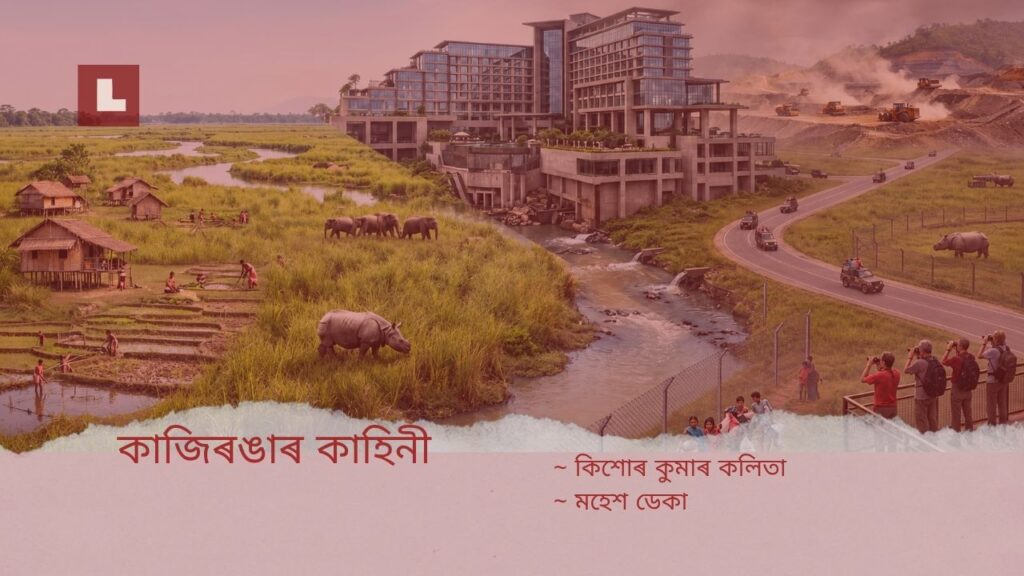
The integration of the region with the rest of India is supposedly complete. Since COVID, the remotest corners have been opened to tourism. Hills have been leveled for luxury resorts so visitors can experience these lands comfortably. Forests have been cut back for wider roads. Food considered palatable to mainland tastes is now available in every town. People have begun learning and using Hindi to make themselves legible, accessible.
The translation appeared complete, the curation seemed finished. And yet, here we are: a young boy murdered for looking different, women still abused in the national capital, the cremation grounds of indigenous communities still disparaged as gandagi.
Why does this persist despite all the accommodation, despite all the bending? Perhaps the bending was never meant to produce acceptance. Perhaps respect was never truly on offer; it was only conditional tolerance, contingent upon continued deference.
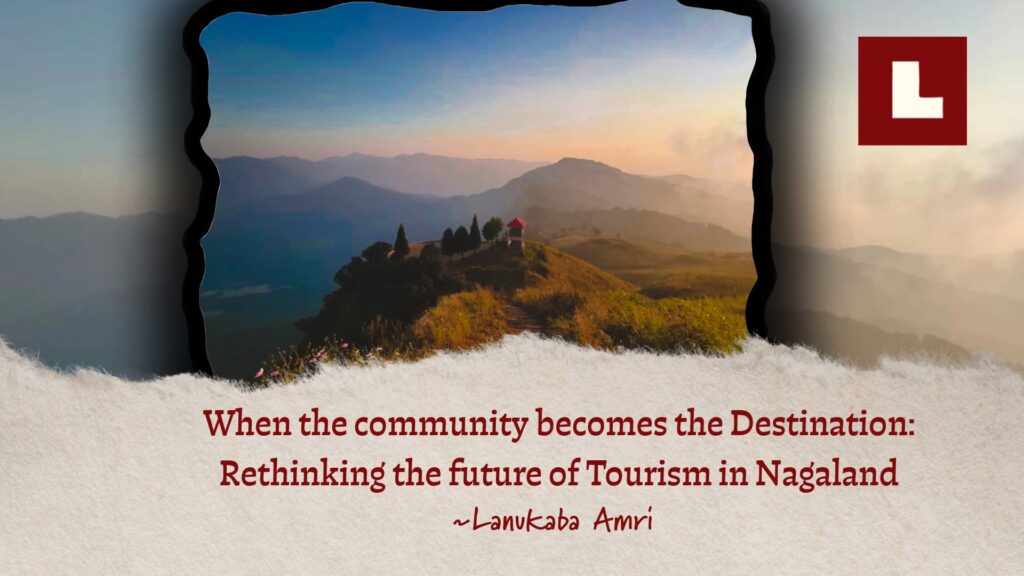
Tourism is sold as the region’s future, framed by both capital and power, with the Northeast pitched by some as the next luxury playground. However, what has truly sustained lives of people here has always been the land, the food, the culture, and the language that are inherently theirs. These are not quaint relics to be preserved for tourist consumption; they are living systems that require protection, assertion, and the courage to reject projects that promise development while delivering dispossession.
This region has always been self-sustaining. Its abundance of resources has long attracted exploitation, yet the knowledge to live with the land, rather than exhaust it, endures. Rivers cannot be allowed to dry, and paddy fields cannot vanish to make way for tourism projects that promise prosperity but deliver low-wage service jobs and environmental degradation. Such initiatives do not sustain life here; they represent extraction under a different guise and must be resisted with clarity, not apology.
This is what Zubeen Garg understood. His music carried this understanding, it animated his artistic and public life. What he expressed was not nostalgia for a vanishing past, but a refusal to accept a future built on someone else’s terms. People here must remain rooted as decision-makers, shaping livelihoods and futures on their own terms, not as curated identities for markets or tourists, but as equals in a shared political community.
To genuinely honour Zubeen Garg, to comprehend how he became who he was for the people here, one must engage with the rhythms, struggles, and relationships that have always shaped life in the Northeast and shaped his music. It was the love between the people and their land, and between him and his community, that made him and his music.
The reels have long faded into the algorithm’s past. The people they sought to decode remain, as they always have been, beyond reach.