Discourses From the East
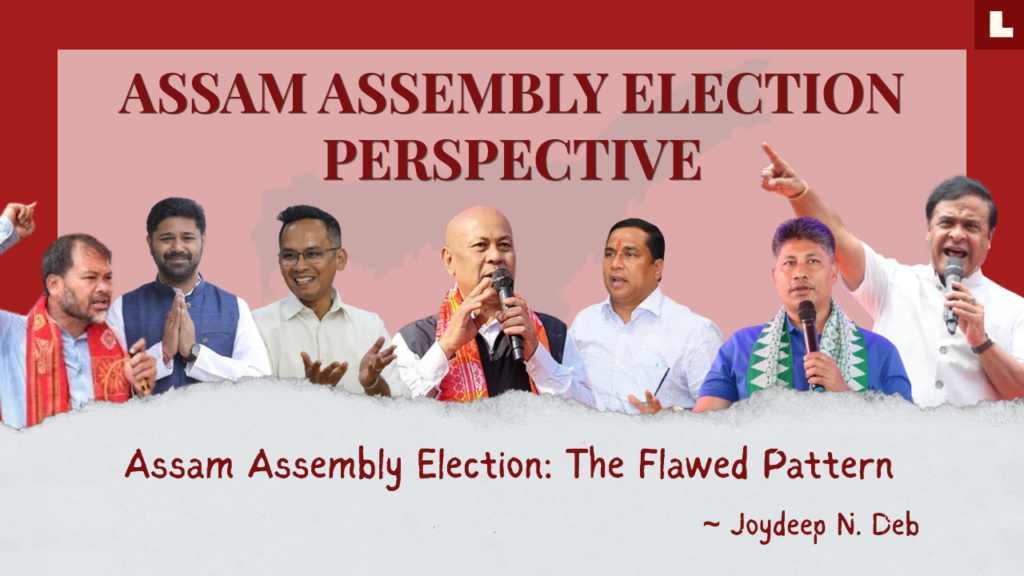

The air in Assam’s Brahmaputra valley, thick with the onset of the monsoon, now also carries the charge of an approaching election. As the state moves toward polling day on April 9, political parties have intensified their campaigns across all 126 constituencies, offering competing visions of development, identity, and governance.
Yet beneath the spectacle of rallies and speeches, questions are emerging about the record of those who have already held office.
Over recent weeks, candidates have focused their messaging on economic growth, infrastructure expansion, and the protection of indigenous identity. The ruling alliance has emphasized continuity and stability, while opposition groups have attempted to consolidate support by framing the election as a critical moment for democratic accountability in the state.
However, scrutiny of legislative performance suggests a gap between campaign promises and past participation in governance.
A report published on March 29, 2026, by Sadin highlighted that approximately 22 members of the outgoing assembly did not raise a single question during their five-year tenure. In parliamentary systems, such interventions are widely regarded as a fundamental mechanism through which elected representatives bring constituency-specific concerns into formal policy discussions.
Among those identified were Bhabendra Nath Bharali and Renupama Rajkhowa of the Asom Gana Parishad, along with several legislators from the Bharatiya Janata Party, including Atul Bora, Hemanga Thakuria, Pramod Barthakur, Darsing Ranghang, Ganesh Kumar Limbu, Ramkrishna Ghosh and Diganta Sonowal.
The report also noted the case of Sashikanta Das, who, despite a similarly inactive legislative record, has since changed political affiliation and secured a nomination for the upcoming election.
At the same time, several incumbents with limited recorded participation have been re-nominated by their parties. These include Utpal Bora, Bijay Malakar, Padma Hazarika, Jitu Goswami, Bolin Chetia, Bhabesh Kalita, Krishnakamal Tanti and Sushanta Borgohain.
Political analysts say such findings raise broader concerns about the functioning of representative democracy. Legislative assemblies are intended to serve as forums where elected officials articulate local concerns, question government actions, and contribute to policymaking. A lack of participation in these processes may indicate a weakening of institutional accountability.
At the same time, party strategies appear increasingly focused on electoral viability rather than legislative track records. In several constituencies, candidate selection has emphasized perceived popularity or organizational strength over documented performance within the assembly.
For voters, this creates a complex landscape. Campaign narratives are often forward-looking, centered on promises and future plans, while measurable indicators of past performance receive comparatively less attention in public discourse.
As Assam approaches polling day, the contrast between the intensity of campaign activity and the limited engagement of some legislators during their tenure is likely to remain a point of debate. Whether this issue influences voter behavior may ultimately shape not only the outcome of the election, but also expectations of accountability in the years ahead.