Discourses From the East
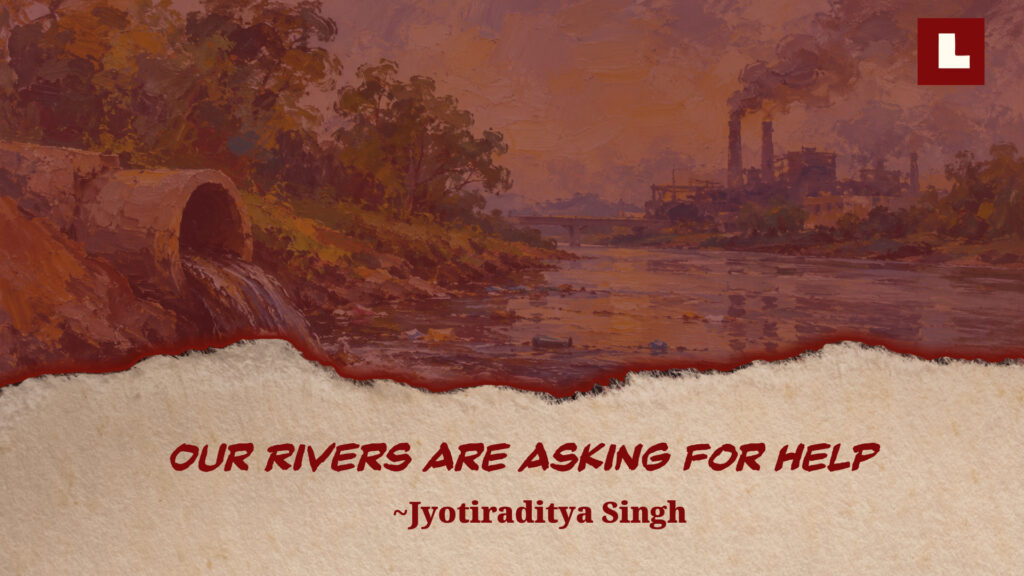

A river can pass through a city for generations and still become something people avoid looking at. Plastic bags collect along the banks, drains carry dirty water into the stream, and in some places the smell is strong enough to make people walk away. For many communities, rivers remain connected to drinking water, farming, work and daily life. Yet the way we treat them often shows how easily a natural resource can be taken for granted. Cleaning our rivers should be seen as a basic public responsibility, not an occasional campaign.
The scale of the problem is visible in official data. In a report published in 2025, the Central Pollution Control Board identified 296 polluted stretches across 271 rivers, using water quality data from 2022 and 2023. This was an improvement from the 351 polluted stretches identified in 2018, and that progress deserves recognition. Still, hundreds of river stretches remain in need of action. The figures also remind us that river pollution cannot be solved through one clean up drive or a few photographs of volunteers collecting waste. It requires steady work over many years.
Much of the pollution entering rivers comes from untreated sewage, industrial discharge, plastic waste and runoff from towns and farms. In places where sewage systems cannot handle the volume of wastewater, dirty water may flow into drains that eventually reach rivers. Factories must follow pollution control rules, and local authorities need the systems and staff to monitor whether those rules are being followed. Plastic waste creates another visible problem. A bottle or food wrapper thrown on a road can travel through a drain during rain and end up in a river. What looks like a small act in one place becomes part of a much larger burden downstream.
The condition of a river also depends on what happens around it. Trees, wetlands and natural vegetation along riverbanks help hold soil in place, provide habitat and support the wider river ecosystem. When trees are removed for construction or roads, exposed soil can wash into nearby waterways during heavy rain. Development brings real needs, including housing, transport and public services, yet planning should account for the environmental cost. Cutting trees near a river without a careful assessment can weaken the natural landscape that helps protect it. Replacing a mature tree with a young sapling is useful, but the new tree takes years to provide the same shade and ecological value.
India’s Forest Survey of India reported in the India State of Forest Report 2023 that the country’s tree cover increased by about 1,289 square kilometres compared with the 2021 assessment. This national increase is encouraging, though national figures can hide what is happening in a particular neighbourhood, city or riverbank. A country may record growth in overall tree cover while some local areas lose mature trees to construction. That is why cities need transparent records of trees removed, clear reasons for removal and public information about where replacement planting takes place and whether those trees survive.
Young people can play a practical role in protecting rivers. Schools, colleges and local groups can organise clean ups, but they should also work with residents to identify where waste enters the water. Community members can report blocked drains, illegal dumping and untreated discharge to the relevant local body or pollution control authority. People can reduce single use plastic, separate household waste and avoid treating drains as a place to throw rubbish. These actions alone cannot replace proper sewage treatment or enforcement, yet they can support larger efforts and help communities demand better services.
Government agencies and local bodies have an equally important responsibility. Sewage treatment plants need to work reliably, and the wastewater reaching them must be connected to the system. Industries should face regular inspections and meaningful action when they break pollution rules. River restoration plans should include water quality monitoring, protection of riverbanks, wetland conservation and public reporting of progress. Tree cutting for public projects should be assessed carefully, with mature trees protected wherever possible and replacement planting monitored over time. A planting target matters less if saplings dry out after a few months.
River restoration also needs honest communication. Authorities should publish water quality results in a way ordinary residents can understand. People should be able to see which stretches remain polluted, what action is planned, who is responsible and whether conditions are improving. Public participation becomes meaningful when residents can track results rather than simply attend an awareness event.
A clean river benefits more than the environment. It supports public health, livelihoods, biodiversity and the quality of life in nearby communities. Pollution often places the greatest burden on people who have fewer choices about where they live or how they access clean water. Protecting rivers is therefore also a matter of fairness. The same principle applies to trees: green spaces and shaded streets should be part of everyday city planning, rather than a luxury available only in a few neighbourhoods.
India has made measurable progress in reducing the number of identified polluted river stretches, and that progress shows improvement is possible. The task now is to keep going, strengthen local action and prevent new damage. We cannot expect rivers to recover while untreated waste continues to enter them or while the natural areas around them are treated as empty land waiting for construction. A river gives life to the places it passes through. Protecting it begins with better public systems, responsible planning and small daily choices. Our rivers are asking for help, and the response must be more than words.
References
- Government of India, Ministry of Jal Shakti, Press Information Bureau. (2026, March 16). River rejuvenations.https://www.pib.gov.in/PressReleasePage.aspx?PRID=2240880&lang=1®=3
- Forest Survey of India, Ministry of Environment, Forest and Climate Change. (2023). India state of forest report 2023(Vol. 1). https://fsi.nic.in/uploads/isfr2023/isfr_book_eng-vol-1_2023.pdf
- Government of India, Ministry of Environment, Forest and Climate Change, Press Information Bureau. (2023, July 20).Analysis of water quality of rivers by Central Pollution Control Board. https://www.pib.gov.in/Pressreleaseshare.aspx?PRID=1941065&lang=2®=48