Discourses From the East
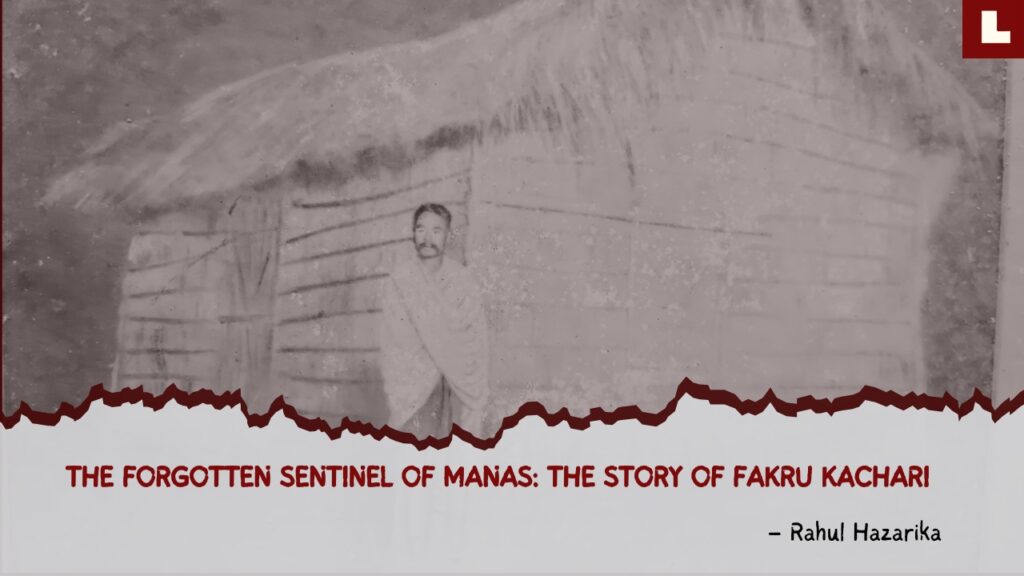

The story of Manas cannot be told without remembering one man who guarded its forests long before it became a park, long before tigers became symbols and forest camps wore uniforms.
His name was Fakru Kachari — one of the first forest rangers of this land.
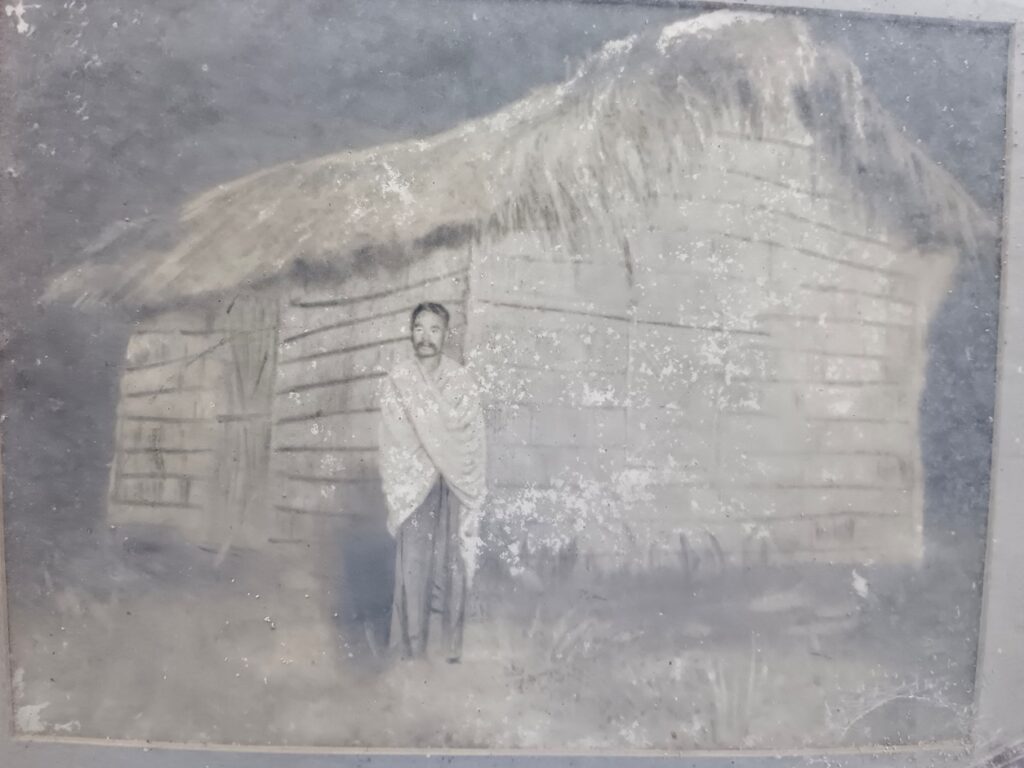
He lived and died for Manas.
Today, his name rarely appears in files or plaques. But in Purona Borgaon, a quiet village near Bhuyanpara, the memory of Fakru still breathes in the air — in the tremor of bamboo leaves, in the pride of his grandson Karan Singh Mushahary, who still calls him “the first protector of our forest.”
“He Served When the Country Was Still Fighting for Freedom”
Karan sits on the veranda of his thatched house, his voice soft but certain.
He points towards the forest line visible beyond the paddy fields.
“My grandfather served during British times,” he begins, eyes fixed on the horizon. “He was a ranger when the independence movement was raging. He retired in 1947, the year India became free. But he never saw the freedom he dreamed of. On his way back home from Tawang to Guwahati, at a place called Baghmara, he was surrounded and killed. Brutally. We were not born then, but my father told us. People cried for days. We still have some of his medals and old service files.”
He pauses.
The forest breeze carries the faint sound of cicadas. Somewhere, a cow moos lazily. The moment feels sacred — as if the man being remembered still stands among them, listening.
Before Manas Became Manas
Long before Manas became a national park or a UNESCO heritage site, it was just a forest. A vast, wild, unmarked forest — home to elephants, tigers, and humble village folk who lived in rhythm with the river.
It was in those raw, uncertain years that Fakru Kachari served.
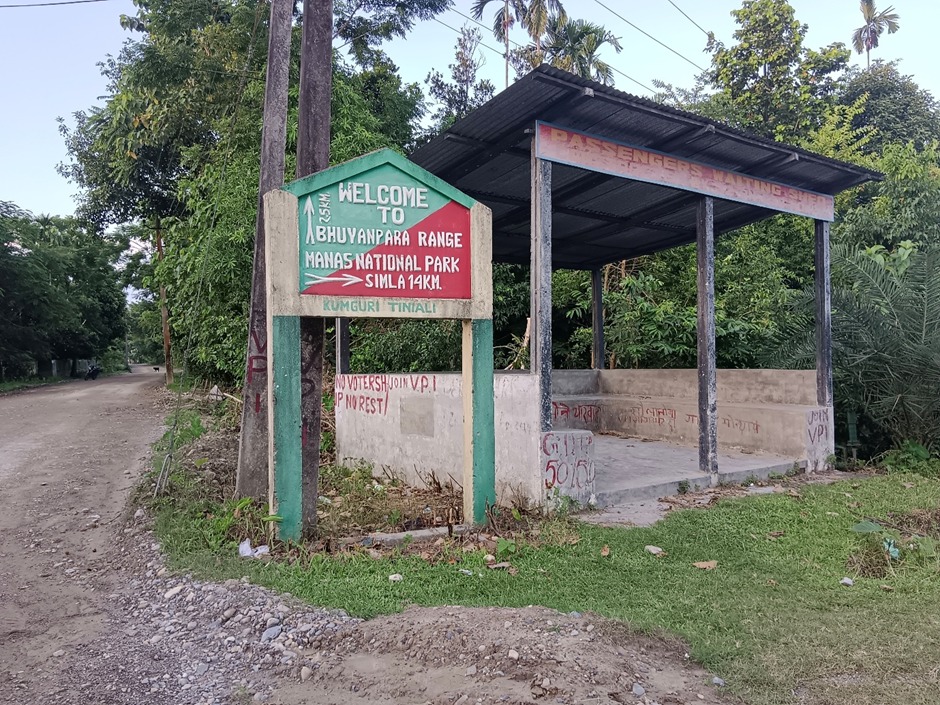
He worked in Pungguri and Ghoramara beats, regions that would later form the famous Bhuyanpara, Bansbari, and Koklabari ranges.
He was a forest man in every sense — walking miles every day on foot, with only a rifle and a notebook, guarding trees from loggers, protecting elephants from hunters, and sometimes protecting himself from the loneliness of duty.
Karan says, “He often told people that the forest was his home. He would leave for patrol and come back after weeks. The jungle was not an assignment — it was a living being to him.”
Also Read: Oil Palm in the Hills: Lessons from Mizoram and Southeast Asia for Karbi Anglong’s Future
A Ranger Before Independence
In those days, being a ranger was not a government job — it was a test of endurance. No motorbikes, no radios, no teams.
Rangers like Fakru patrolled alone, through floods, storms, and nights full of wild calls.
The local elders say that he was strict but kind, that he never allowed a tree to be felled unnecessarily. He used to sit with villagers by the fireside, warning them gently — “Forest is mother. Don’t hurt her.”
People listened. Out of respect, out of fear, or maybe both.
He received several medals during his service — one from Tawang, Arunachal Pradesh — symbols of a duty carried out in silence. Today, those medals lie wrapped in an old piece of cloth in Karan’s trunk. Faded. But not forgotten.
A Death That Still Echoes
The year 1947 was supposed to be a year of freedom. But for Fakru, it became the year of death.
After retiring, he stayed in Tawang for a while. While returning home to Guwahati, he was ambushed at Baghmara — no one knows by whom or why. He was killed on the road, far from his forest, far from home.
Also Read: The Rivers of Memory: Khasi Myths and the Puri
“There was no investigation, nothing,” Karan says, looking away. “It was a time of chaos. My father said villagers wept for him as if the forest had lost its own voice. Even now, when elders talk of him, they say — ‘Fakru protected Manas when no one else did.’”
It’s a story carried by word of mouth — from father to son, from silence to remembrance.
The Forest He Left Behind
When Fakru started patrolling these forests, there were no borders between man and nature.
Elephants roamed close to villages. People collected bamboo and thatch carefully, taking only what they needed. The Manas River was their lifeline — sometimes cruel, sometimes kind.
The beats he once guarded — Ghoramara, Pungguri, and Bansbari — are now patrolled by forest guards with wireless sets and vehicles. Where his old camp once stood, there is now an SSB camp. The forest he loved has changed, but the memory of his devotion still lingers in the soil.
Purona Borgaon: The Village That Remembers
Walk through Purona Borgaon today, and you’ll still hear his name in conversations.
“He belonged here,” villagers say simply.
The old ones remember his tall frame, his stern eyes, and the way he greeted everyone with a nod.
To them, Fakru was not just a ranger — he was one of their own.
When elephants raided fields, he helped chase them gently, never allowing harm to the animals. When British officers came to inspect, he spoke proudly of the forest as if it were a temple.
That pride has not died. It has merely changed forms.
Also Read: Unburying Nellie: What the Tiwari Report Means for Assam’s Unhealed Wounds
Karan now farms the same land his grandfather once walked across on patrol. “Every time I go near the forest, I feel his presence,” he says. “Sometimes, in the stillness of the trees, I can almost hear his footsteps.”
The Unwritten History of Manas
In official archives, the story of Manas begins with its declaration as a sanctuary in 1928.
But on the ground, the story began much earlier — in the hands of men like Fakru Kachari who guarded its wilderness without fanfare or funds.
Without people like him, perhaps there would have been no forest left to protect later. He and others like him kept alive what the world would one day call “natural heritage.” They didn’t speak of conservation; they lived it.
There’s a lesson in that — that the roots of protection don’t always begin with policies. Sometimes, they begin with one man’s love for the forest.
A Forest, A Family, A Legacy
When the evening falls over Bhuyanpara and the sun melts behind the sal trees, the forest looks timeless.
The birds return home, the river hums its nightly tune, and somewhere, under the same sky, Fakru’s story still floats in the wind.
Karan’s children are growing up hearing that story — about a grandfather they never met, a ranger who died before independence, a man whose spirit still guards the forest in silence.
“He didn’t live to see free India,” Karan says. “But I think he died free — in the forest he loved.”
In that line lies the quiet poetry of Manas. A forest that remembers its first ranger. A family that carries his memory like prayer. And a legacy written not in ink, but in green.