
Discourses From the East
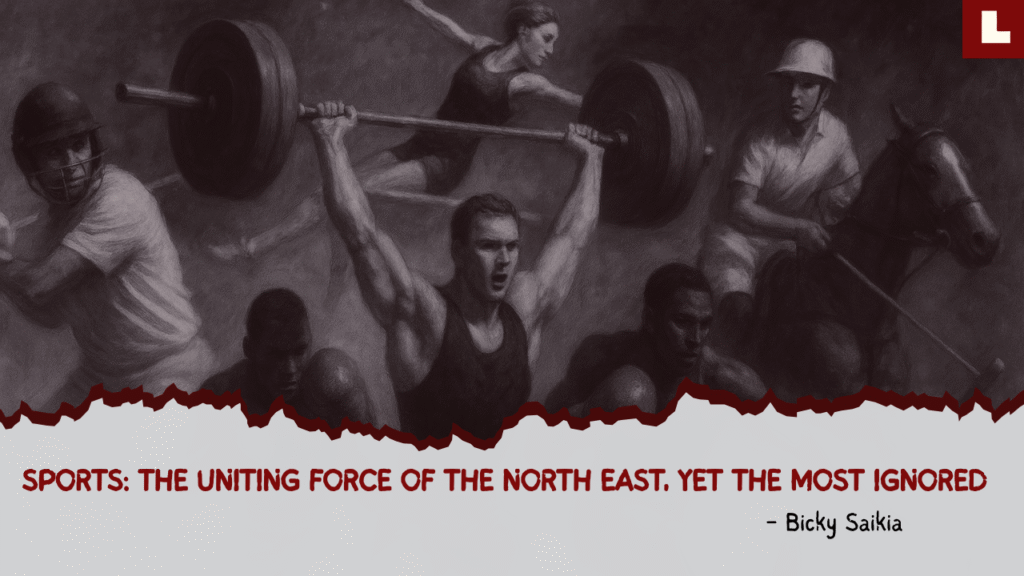

Sports ties communities, cultures, and identities together. In India’s North East, this bond is stronger. Eight diverse states often struggle with stereotypes, geographic isolation, and limited representation. Yet the region continues to shine on national and global sporting stages. Beneath the applause, however, lies a fragile ecosystem marked by poor structures, limited pathways, and neglected grassroots talent.
The ISL Wave That Sparked Hope
When NorthEast United FC was launched under John Abraham’s ownership, it created excitement across the region. The first ISL match in Guwahati felt like a new chapter. The signing of Durga Bodo symbolised local hope. People from the Khasi Hills and Shillong travelled to witness history. Stadiums were full, Hotstar numbers rose, and young people began speaking about football careers with newfound confidence. It created identity, pride, and unity.
The momentum faded quickly. The excitement did not translate into a long-term sporting culture. The project lit a spark, but the system could not sustain the flame. This raises a difficult question: Can football alone support sporting careers in the North East?
The answer is not simple. Football in India still lacks career security. Commercialisation has helped, but without strong academies, scouting, investment, and school-level support, it cannot offer a stable future.
Beyond Football: Where the North East Excels
The North East has long excelled in sports like boxing, weightlifting, wrestling, archery, athletics, taekwondo, wushu, karate, and judo. Women athletes in particular have carried the region’s name to global platforms. Mary Kom, Mirabai Chanu, Lovlina Borgohain, and Hima Das are powerful examples.
These achievements are remarkable, but they are not the product of a well-built system. They are individual acts of defiance that rose above inadequate infrastructure and lack of support.
The Cultural Mindset: A Silent Barrier
A major obstacle comes from within society. Families prioritise academics over sports. Children are pushed toward exams, not stadiums. Sports is seen as recreational, not as a career. The irony is that the region is known for its strength, stamina, and agility, yet these natural advantages are rarely nurtured.
Economic factors also play a role. Developing an athlete requires time, money, and knowledge that many families cannot afford. Success in sports is often treated as a pathway to desk jobs in government departments, not as a route to a professional sporting career. This mindset limits growth.
The Invisible Drawbacks Nobody Talks About
Government schemes often look promising on paper. Under the Olympic Podium Scheme, the region hosts National Centres of Excellence. Arunachal Pradesh has one such centre with high-performance facilities. Yet only about 20 percent of its beneficiaries are from the North East. Most coaches, nutritionists, and support staff come from outside the region.
A centre located in the North East should nurture local talent and build local capacity. Without this, the purpose of placing these institutes here becomes unclear. A coach from another state may be skilled, but sports is personal. Food habits, environment, communication style, and emotional support matter. Local representation empowers future generations. This imbalance needs attention.
Khelo India Centres: A Good Start Without a Roadmap
Khelo India centres created opportunities for unemployed athletes and grassroots trainees. But after two or three years, the same question appears: What next? There is no clear transition pathway, no collaboration with federations, no mapping of talent, and no progression into academies or NCOEs. Talents disappear without support. Grand schemes lose meaning without continuity.
Implementation: India’s Weakest Link
India has no shortage of schemes. What it lacks is monitoring, accountability, long-term planning, data, and structured progression. Nations like China, Japan, and Korea invest decades in athlete pipelines. In India, athletes fight individual battles inside broken systems. Sports and education need to be integrated as a single process. Without cultural support, even good schemes will fail.
The Role of Media: The Missing Backbone
Media plays a key role in building sporting culture. The North East has lacked dedicated sports journalism for a long time. This gap led to the creation of NE Sports, the first dedicated sports media platform in the region.
The Hima Das Wake-Up Call
When Hima Das won at the world stage, the nation celebrated. But very few knew her struggles before she reached the podium. This showed a larger problem. We only celebrate the end of the story, not its beginning. NE Sports decided to document athletes from the start. Grassroots tournaments, village coaches, injuries, rejections, and sacrifices need to be seen and understood.
Why the North East Needs Visibility
The North East is naturally strong in sports. Yet it remains underrepresented in national media. Sports is one of the few arenas where tribe, ethnicity, religion, and caste do not matter. An Assamese cheering for Mary Kom is a simple example of this unity. Sports dissolves borders and builds emotional bridges.
Sports as a Weapon Against Discrimination
The North East faces discrimination in many parts of India. But in sports, stereotypes fade. Performance speaks louder than prejudice. A medal becomes a message: ability is not defined by geography.
What Must Change
To build a strong sports culture, we need to:
• make sports a mainstream career option
• provide academic flexibility
• recruit and train local coaches
• create scouting networks across schools and districts
• ensure collaboration between Khelo India and federations
• increase competitions
• support media visibility at the grassroots
• encourage families to invest emotionally in sports
Building a Real Sports Ecosystem
A strong ecosystem includes school tournaments, district leagues, scholarships, physiotherapy, nutrition programs, media coverage, sponsorships, and post-career opportunities. Today, athletes lose out due to preventable issues like untreated injuries, poor diet, expensive travel, and inconsistent training.
Athletes should not have to fight their sport and their system at the same time.
A Future Worth Building
Sports unites the North East more deeply than any other platform. It brings together tribes, cultures, and languages. But potential must become legacy. This requires long-term planning, better systems, and dignity for grassroots talent.
Platforms like NE Sports will continue to highlight athletes from their first step, not only when they win medals. For the North East, sports is identity, unity, and pride. The world should know our athletes not only when they win medals, but while they are chasing them.

Sports is a polical weapon. But with the current tendencies of internal colonization local talent cutivatio will remain will remain a distant dream.