Discourses From the East
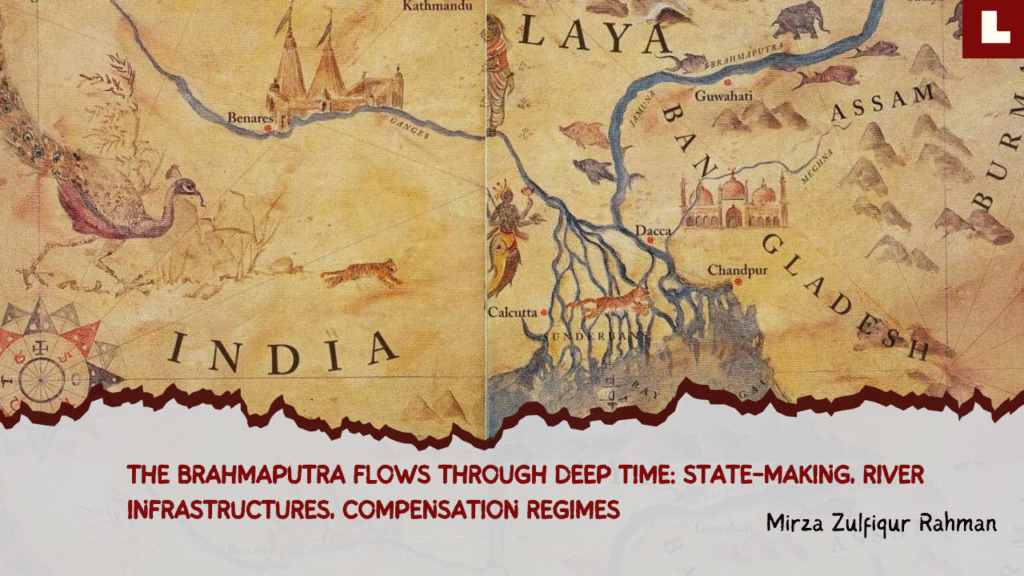

The Brahmaputra flows through deep time. The river runs deep into the lives and livelihoods of people who have lived and moved along it, shaping the biota around it and sustaining the non-human and other-than-human lives around it. The Brahmaputra is a majestic moody river. It holds the imagination of riverine communities who lives beside it, in the midst of it, have meandered along it from time immemorial. It offers through its meandering braided flows, a deep ecology understanding as vast as its own expanse as it shapes the landscape. It immediately provides us with a larger lens, a multiplicity of river views and perspectives to understand life. Why is the understanding of rivers flowing in deep time important? It is to respond to the polycrisis that we are collectively facing in planetary terms, in alternative framings and innovative ways.
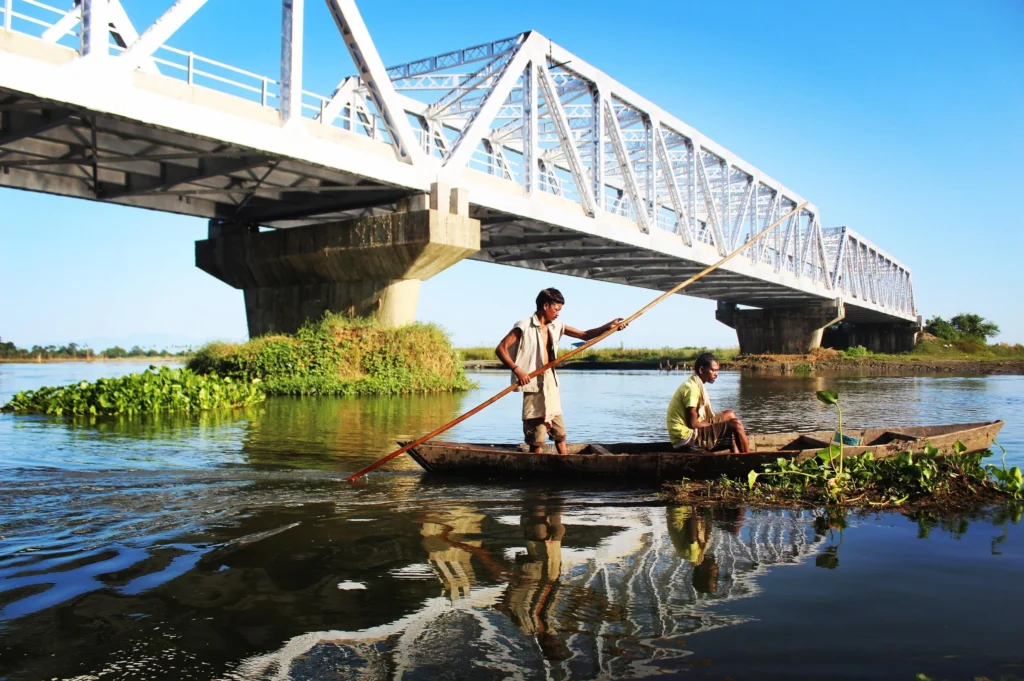
The river teaches us many things, the sharp distinction between what is fixed and what is fluid in life and nature, the bordered, un-bordered, de-bordered, re-bordered in our collective actions and thoughts, the bounded and unbounded, intensely braided and complex like our social, cultural, economic and political systems. It teaches us weaving, intertwining, multi and inter disciplinary, engaged thought and social action.
The Brahmaputra expands our horizon of thought and social action, because at many points in the river, the horizon is limitless. The Brahmaputra flows deep into the imaginations of life along its course, just by the sheer vastness, magnitude, quietness by which it flows, powerfully held along its course through deep time. It has inspired many a poet, artist, writer, researcher, activist to engage with its poetics as well as politics.
It has an impact on personal life, community life and worldviews, on community politics. It has an impact on state politics in the region, geopolitics between upper, middle and lower riparian countries. It has the imagery of the master moody sculptor, which creates and forms the landscape, and life around it, holding, determining, and governing so many aspects of social, cultural, economic and political life at the same time.
Also Read: The Forgotten Sentinel of Manas: The Story of Fakru Kachari
The deep ecology understanding of rivers in a deep time perspective comes from understanding the river as a living entity. The river is an incarnation of a spirit, other-than-human, a more-than-human that encompasses the riverine transboundary spaces and landscapes. It is a spirit that people revere, a sacredness in a spiritual way, a cultural way of life and belonging, in emotional connections of a different dimension.
We often talk about development, displacement, compensation and rehabilitation almost in the same breath, but displacement means very different things to different people resident along the river. You are displaced not only from the spaces that your ancestors have lived for centuries; you are displaced in your own personal, family, community lives. Multiple displacements occur in perpetuity, which constructs precarity.
Compensation regimes and rehabilitation processes are not effectively on the ground for displacement due to development projects and interventions. The communities have been rooted to the riverscapes and landscapes around it for generations, they know the pulse of the river, and have used their indigenous knowledge systems to adapt and coexist with the riverine space, as it has moved and meandered over time.
China is planning a series of serious surgeries on the head of the Brahmaputra river system, upstream of the Siang, in Tibet, where it is known as the Yarlung Tsangpo. The most debilitating of those surgeries is at the Great Bend, a region revered by local communities as abode of the goddess Pemako, with the Medog hyper dam of 60 GW, which will radically disfigure the face of the transboundary Himalayan river system.
When China is cutting up the head of the Brahmaputra in Tibet through these mega dams upstream, India cannot say that we will now cut up the rest of the body of the Brahmaputra within our territorial limits downstream, since China is already doing it. The race to cut up the body of the Brahmaputra by China and India puts the entire sensitive and ecologically fragile Himalayan bioregion and ecoregion in serious jeopardy.
The cumulative surgeries and cutting up of the river system will make the Brahmaputra eventually dead. How much compensation can actually replace a dead river? The state cannot come and announce that we have already decided to cut up the river system into several pieces, and we have now come to ask the communities how much compensation will be enough to displace and rehabilitate them away from the river.
Do the state and the communities living by the river have the right to determine the fate of a river system, formed over a deep geological period, through policy decisions and compensation regimes? Do they have the assessment capability of how much compensation is enough to allow for killing a river system, and move away from the river forever? Can they put a cost to the river’s value in sustenance of other life forms?
The deep time perspectives of rivers are critical for both the state and communities engaged with the river, to be able to answer the above questions. In order for a planetary thinking on rivers to emerge, we need plural perspectives and go both ways, from the international and global to the planetary, and from the international and global to the grassroots. The alternative worldviews and riverviews is a critical pathway for this.
Climate change has forced us to rethink our conceptual map and language of understanding the world. This can be enabled by the language that we employ to describe climate change impacts, such as the types and patterns of monsoon rainfall, the pulse of floods, and the vernacular understandings of river systems. It is not by erasure of local cultural and traditional specificities of how communities understand river ecologies.
Rivers have shaped over time, and an accurate understanding of the unique environmental history of different river systems, such as the Brahmaputra, is important for those who live by the river to make informed choices about the river. Floods in Assam were once celebrated and welcomed with Bihu; while now the catastrophic cycles of floods bring sorrow to the people living between the embanked riverscapes.
Communities living along the Brahmaputra are perennially busy in responding to floods, responding to big dams, responding to wetland degradation, embankments, dredging and tunneling, precarious communities trapped in responding to catastrophic riverine events. There is no time to use their traditional knowledge systems to adapt to changing river patterns or pulse in the face and pace of largescale state led interventions.
The thinking on rivers cannot be in linear, fragmented and boxed perspectives within nation-states. A deep time perspective on rivers allow for alternative worldviews, community riverviews, meander our thinking, adapt, collect sediments, basically imitate the natural geography and patterns of the riverscapes itself. The community riverviews and lived experiences are an archive in itself, which can lead to bioregional thinking.
To move from this wider frame to the lived rhythm of the river, you only need to pay attention to how the Brahmaputra holds memory and change, an archive of deep time. And to understand that, we must ask: what if we spoke about time?
We often talk about the future like we’re running towards it. But more often than not, it feels like we’re running past something. As if we are always living at the edges and margins of time.
And when we talk about rivers, we often talk about floods, dams, and development.
Not time as we know it, months, deadlines, elections.
But time as the Earth knows it, geological time.
The time it takes a river to cut through stone.
The time it takes for a mountain to rise.
The kind of time that can’t be reasoned with.
This is called deep time.
A way of seeing rivers not just as water bodies, but as living forces that have shaped our world for millions of years.
To care for a river, we have to understand its memory. And to understand its memory, we have to zoom out far enough, until we realise we are just a moment on the map.
The rivers, the mountains, they’ve seen entire civilizations come and go, while we have just arrived. Sometimes I wonder: is time part of the landscape? Or is time the landscape itself?
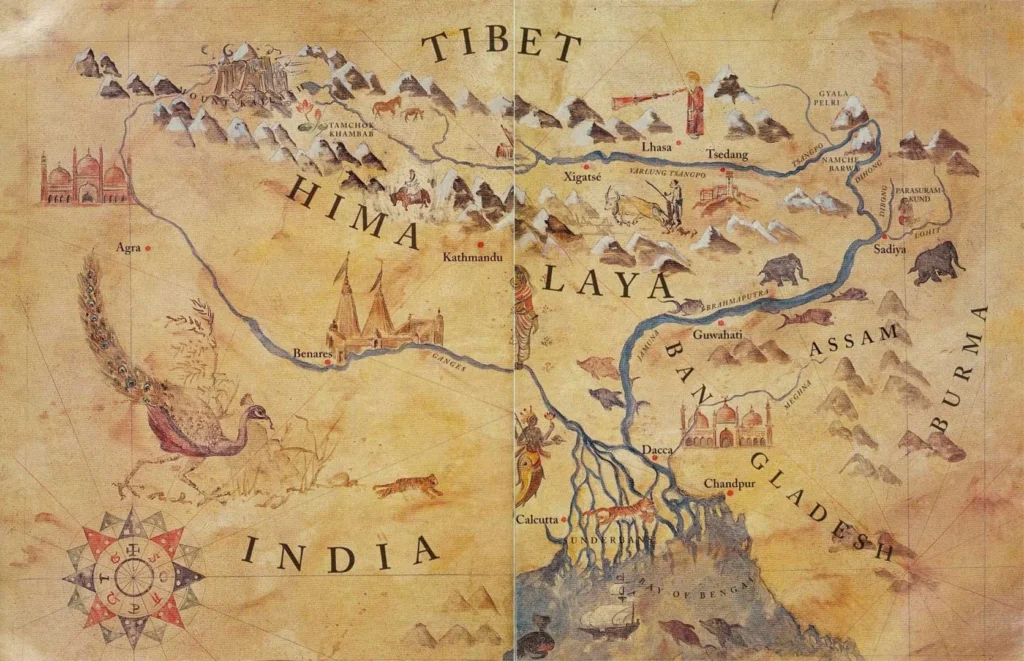
The river is being dismantled.
And nobody is talking about it.
While climate change headlines fill our timelines, a more permanent shift is taking place. Right now, the Brahmaputra river is being cut apart.
In Tibet, China is building a series of massive dams at the headwaters, where the river is called the Yarlung Tsangpo. One of them, the Medog mega dam, will be one of the biggest in the world. It is being built at the Great Bend, a site sacred to local communities who believe it is the home of a goddess, Goddess Dorje Phagmo.
Further downstream, in Arunachal Pradesh and Assam, India is preparing its own line-up of dams. The Siang, a major tributary of the Brahmaputra, is set to be divided into 36 separate projects.
This is no longer about control, regulation or development. This is dismemberment.
Once the river is carved into engineered parts, how do we put it back together again?
And if the river dies, if its flow, rhythm and ecology are broken, what can ever replace it?
What is deep time, and why does it matter?
Let’s break it down.
We often think of time in terms of our own lives, school years, careers, deadlines, five-year plans.
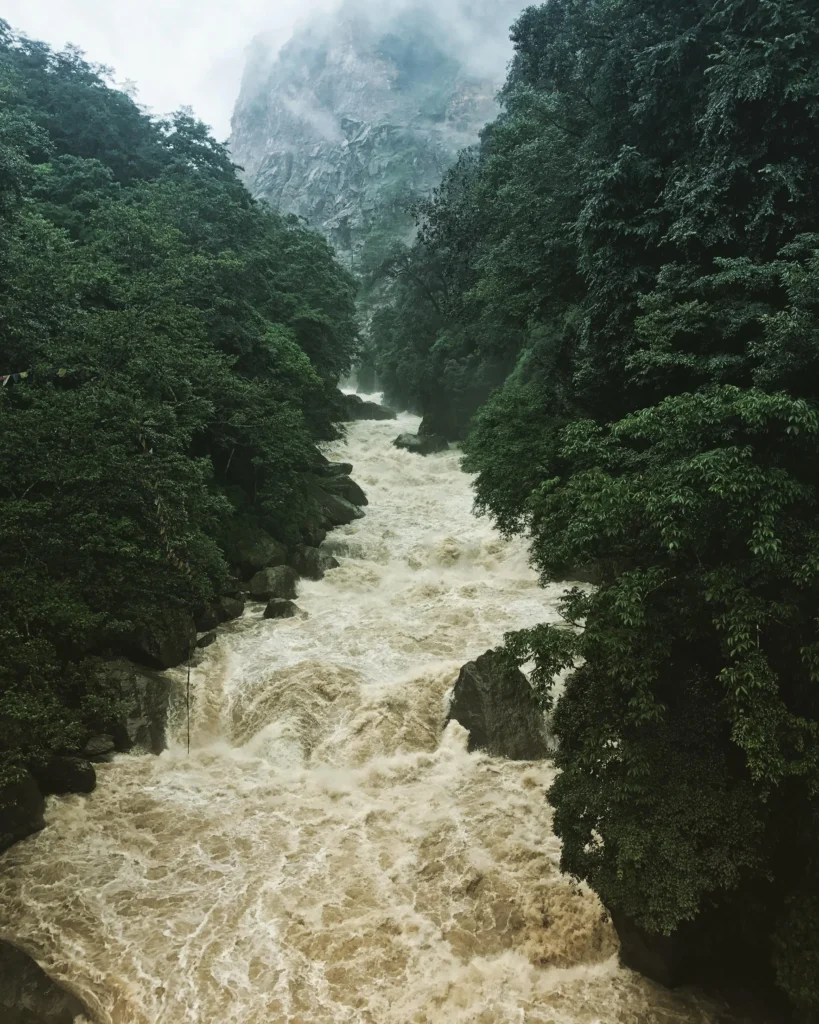
But rivers do not think in five-year plans. They think in centuries, thousands of years, millennia.
Deep time is the time of riverbeds shifting, of monsoon patterns forming, of mountain ranges rising. It is the time a river takes to shape a valley. To become home for somebody. Or to become a God for somebody living along it.
They do not move according to our policies. They move with the wind, the monsoon, the mountains.
They have shaped everything around us. To see a river through deep time is to see it as a teacher. A master moody sculptor. A spirit living on through time.
And when we ignore this, when we try to force a river to follow our rules, we forget that we are just a moment in its long story, mere sediments in its vast unbounded flow.
The Brahmaputra
The Brahmaputra is no ordinary river. It is moody, massive, and alive in ways we rarely acknowledge.
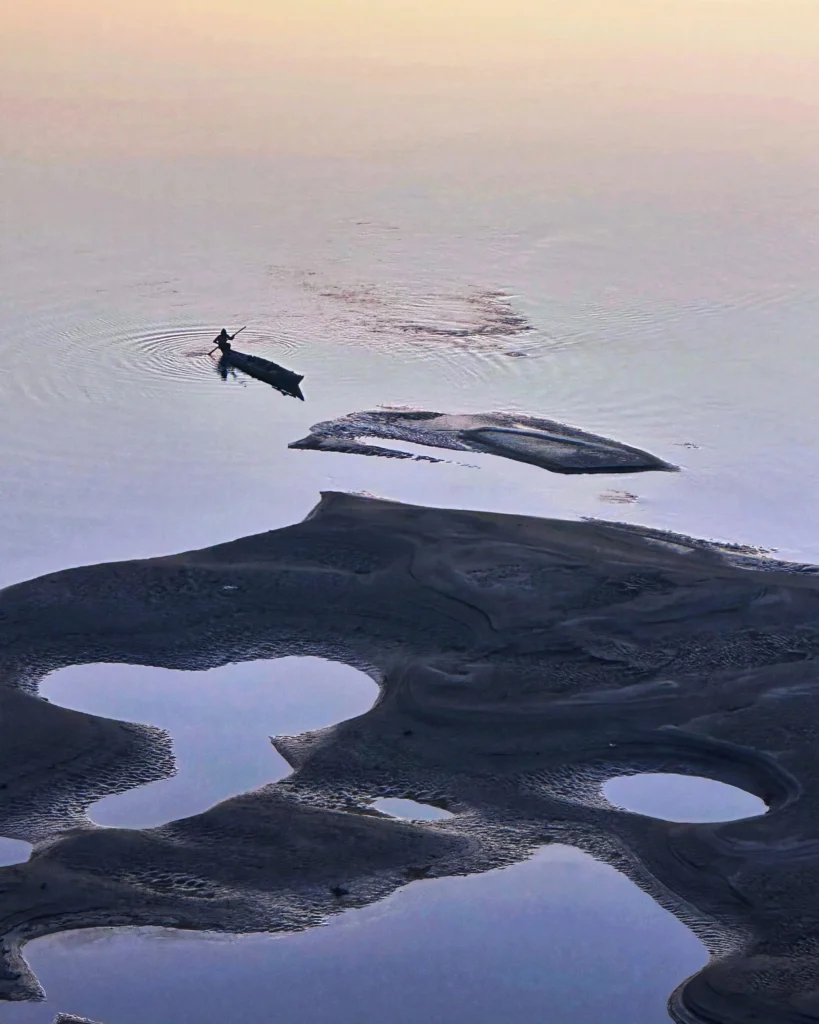
It roars in spring, sulks in winter, splits and reunites, shifts its path at will. It is both storm and stillness.
It shapes not only the land, but the worldview of everyone who lives beside it. It teaches us about what is fixed and what is fluid. About how identity can shift, how nations draw borders, and rivers unshackle them with their flows.
It is a sculptor of valleys and lives. A witness to rituals, displacements, births and floods. It is sacred to many and home to more. It has inspired both politics and poetry.
And yet, in the name of development, we are trying to rewire something that has outlived kings and cartographers.
The people
We speak of displacement like it is a single event. But along the Brahmaputra, it is a constant pressure. Communities lose land, rhythm, routine. They lose the memory of how they belong to a place.
The people of the river have spent centuries learning its moods, reading its shifts. Their knowledge is not theoretical, it is seasonal and practical. But today, that knowledge is sidelined by blueprints and feasibility reports.
The Siang, also known as Ane Siang or Mother Siang, is planned to be divided into 36 fragments. Thirty six. People are told they will be compensated. But how do you compensate someone for dismembering their Mother?
And when compensation arrives, if it arrives, it rarely understands the depth of that loss.
They have adapted to the river’s moods for generations. They know its floods, its dry spells, its shifts. Their knowledge is lived, not learned from books. But this knowledge is being ignored in favour of concrete plans of nation-state bordered geopolitics.
The politics of control vs the practice of care
Can a river that predates our borders be governed by our bureaucracies?
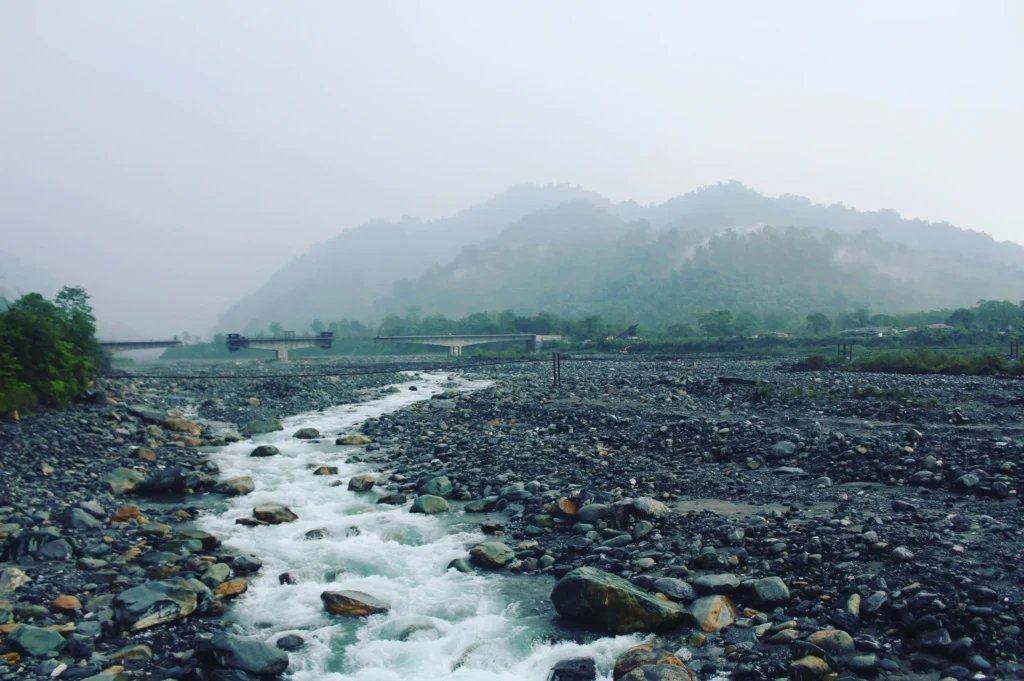
Can the fate of a transboundary river system be decided by national interest, when its spirit is older than the nations themselves?
The Brahmaputra is caught in a geopolitical race. China and India are both carving it up under the logic of “if they do it, so must we.”
What is lost in this race is the river’s right to exist as itself, not as a power source, not as a border threat, but as a being. What is needed is not just treaties. It is a shift in language. In imagination.
A river cannot be managed in fragments. It must be understood in flow. Through flood songs. Through migration patterns. Through rituals that mark its changes. And to do that, we must listen to those who have lived with the river. The river does not care about borders. But it will respond to what we do. And if we continue to treat it like a resource instead of an ancestor, it may stop giving life and start taking it.
A book to read if you care about rivers of deep time
Rivers of the Asian Highlands: From Deep Time to the Climate Crisis is a vital book for our times.
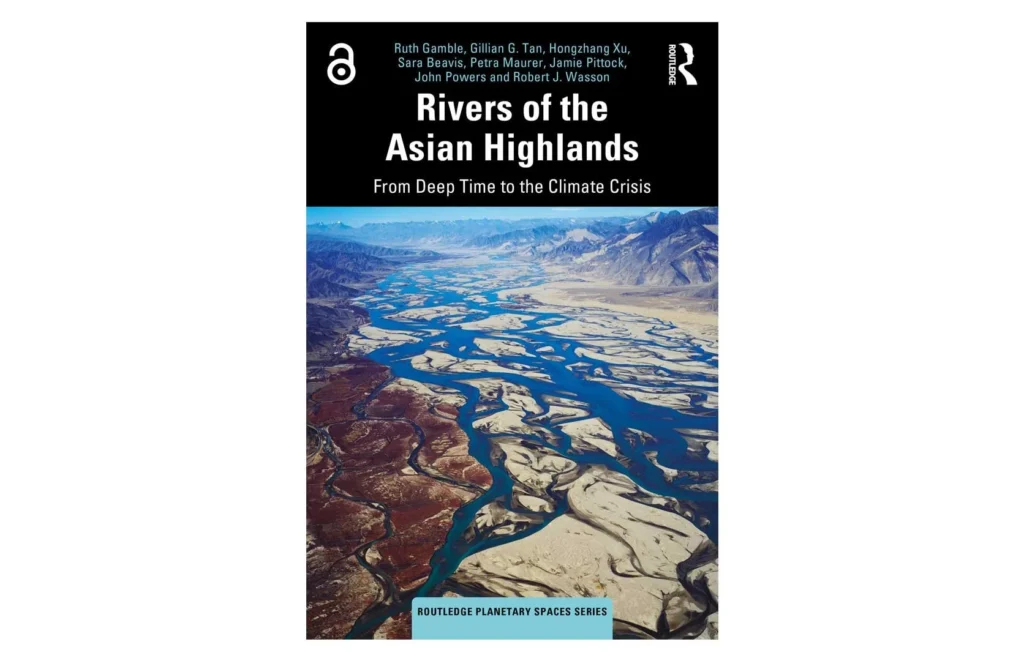
Written by Ruth Gamble, Gillian G. Tan, Hongzhang Xu, Sara Beavis, Petra Maurer, Jamie Pittock, John Powers and Robert J. Wasson, it explores the stories, crises and meanings of rivers across the Asian Highlands.
It brings together voices from science, culture, history and lived experience to show how rivers are much more than physical flows. It offers a braided view of rivers, just like the rivers themselves, which twist and turn, split and merge.
Most importantly, it connects the macro, climate crisis and international policy, with the micro, local knowledge and seasonal rhythms, a blend I believe is essential if we are to have any hope of protecting rivers like the Brahmaputra.
It is a book I hope more people will read.
The book explores what it means to live with rivers through deep time. It shows us rivers as social, spiritual and ecological systems. And it reminds us that saving a river is not just about stopping a dam. It is about changing how we see the river in the first place.
I recommend this book not just as a scholar, but as someone who has spent years listening to this river, and learning to walk at its pace, live and flow along its moody meanders.
A shorter version of this article appeared in the blog Its Wild Out Here