
Discourses From the East
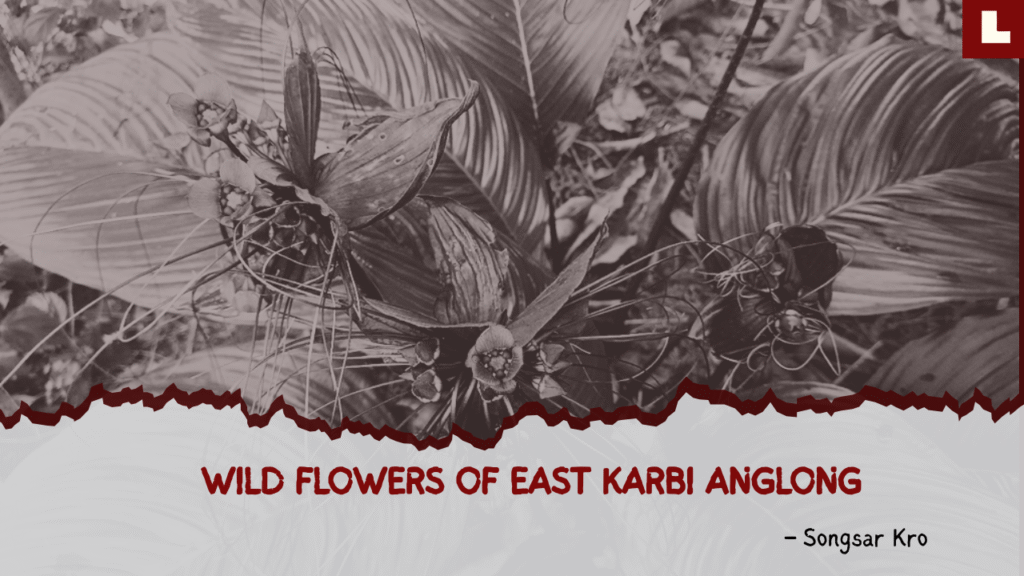

Editorial Note: Songsar Kro has attempted to give a brief account of the flowers in East Karbi Anglong and their intricacies in local customary practices and traditional medicines. Kro has also hinted about the man made changes in the climatic conditions that may have an adverse effect on not only the fragile ecology of the Hill district of Assam, but also on the rare flower breeds. He plans to write more on it in future.
East Karbi Anglong is rich in biodiversity, with its thick rainforest covering the Eastern Forest Range and the Northern Forest Range. It is home to some of the rarest flora and fauna, hidden in the foggy hills and valleys, with unexplored waterfalls, streams, and gigantic trees.
Orchids
East Karbi Anglong is home to both epiphytic and terrestrial orchids. The Karbi people call it ‘Mirdan’.
The thick rainforest, with streams flowing down its valleys and less sunlight, provides the perfect conditions for the survival of these plants.
The Nambor reserve forest connecting the Inglong Ikpi hills under the Eastern Forest Range up to the hills of the Northern Range, Dolamara, is home to some of the rarest epiphytic orchids, such as Cymbidium Dayanum.
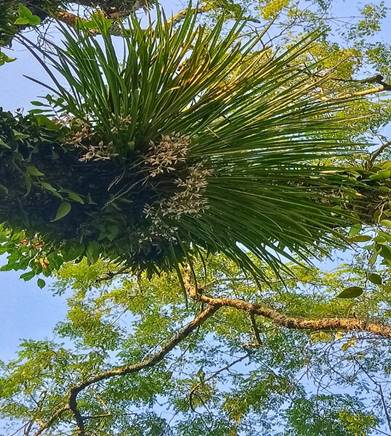
Photo: Cymbidium Dayanum
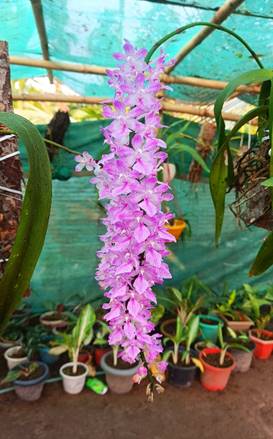
Photo: Aerides Rosea
Epiphytic orchids, such as Foxtail Orchid, also known as ‘Kopou phul’ in Assamese, are the state flower of Assam. It is found abundantly in the region. Orchids such as Aerides Rosea, Aerides Odorata, Dendrobium chrysanthum, Phalaenopsis mannii, Bulbophyllum careyanum, Cleisostoma simondii, Robiquetia spathulata, Bulbophyllum affine, and Dendrobium jenkinsii are also seen in fewer places. Dendrobium Nodosum is an orchid used by the Rengma Naga tribe as a traditional ornament due to its sweet scent emitted from the dried plant. Amongst these, Papilionanthe teres, Foxtail orchid, Dendrobium aphyllum, and Cymbidium aloifolium are pretty common in the region.
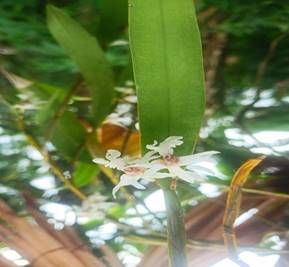
Photo:Dendrobium nodosom
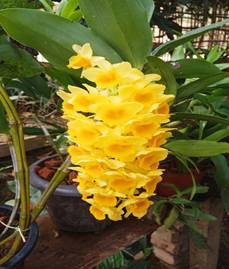
Photo : Dendrobium densiflorum (Pineapple orchid)
The valley serves as a host to some of the amazing terrestrial orchids, such as the Calanthe masuca, Phaius tankervilleae (nun’s hood orchid), and Arundina Graminifolia(Bamboo orchid).
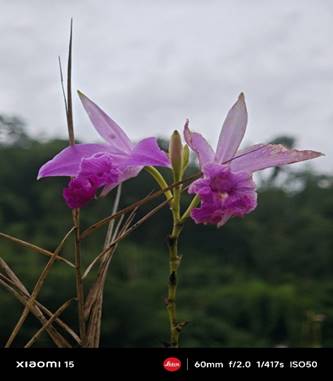
Photo: Arundina Graminifolia (Bamboo orchid)
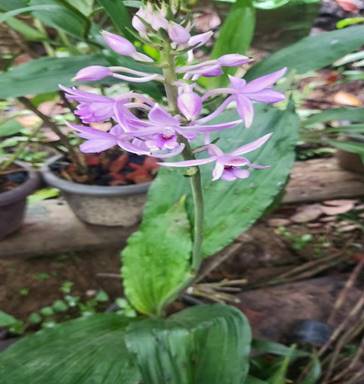
Photo: Calanthe masuca
These are just a few of the amazing orchids native to East Karbi Anglong of Assam. Some yet to be identified and recorded.
The land is also home to one of the rarest and most endangered wild-flowering plants, the Tacca Chantrieri, commonly known as the ‘Black Bat flower’. It is used as a herbal medicine by the locals. In Karbi, it is called ‘Chu dingpi’ and ‘Baghor dari’ in Assamese, for its hair-like whiskers. Another plant belonging to the same family, ‘Tacca integrifolia’, also known as ‘white bat flower’, thrives in selective places of the deep hills.
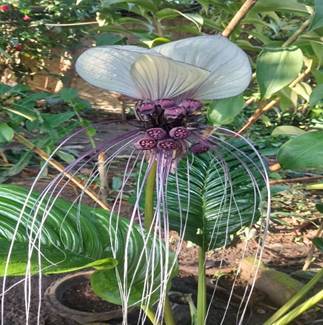
Photo: Tacca integrifolia (White bat flower)
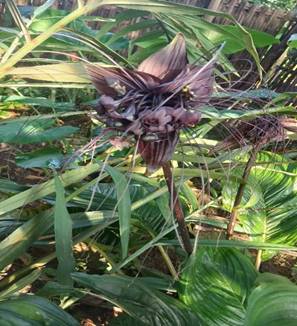
Photo: Tacca Chantrieri (Black Bat flower)
In recent decades, following the introduction of motor chainsaws in the hills, extensive deforestation has led to a change in regional temperatures. The hills, humming with chainsaws and earth movers, could damage the natural habitat of these plants. Conservationists, Concerned authorities, NGOs, and intellectuals must join hands to educate locals about the importance of their existence and conservation through awareness campaigns and eco-tourism.






Keep up the spirit osa.