Discourses From the East
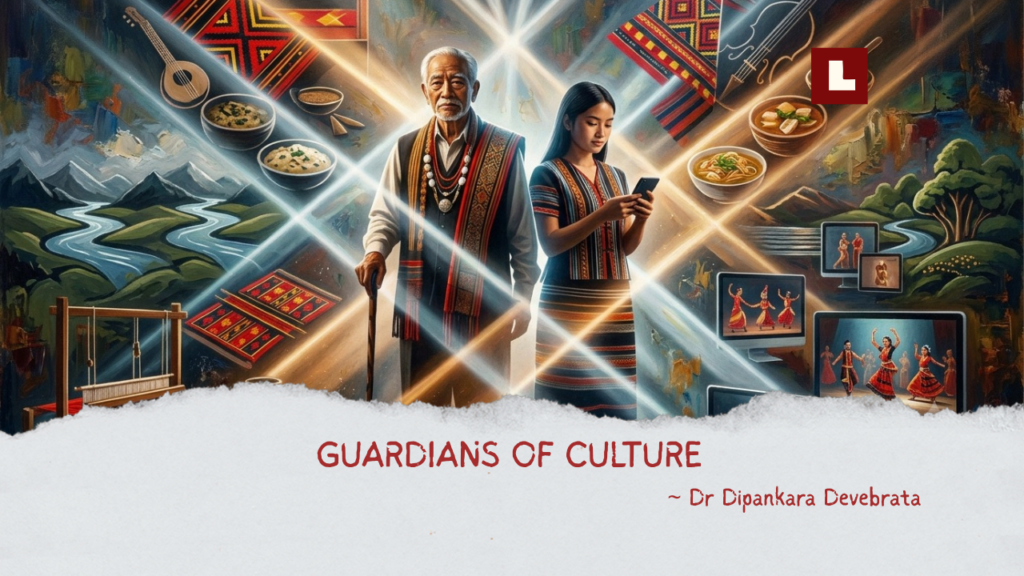

Calling the Northeast “culturally rich” is an understatement and doesn’t even begin to capture the scale of it. The region is a living mosaic of indigenous communities, languages and artistic traditions thriving alongside one another. Each community has its own distinct identity, reflected in its clothing, cuisine, music, dance and festivals. Traditional practices of the region like handicrafts, folk songs, dances etc reflect a deep respect for nature, community and ancestral values. Despite the influence of modernization, the people of the Northeast continue to value and preserve their cultural heritage. While the older generation can preserve culture during their lifetime, it is only the young who can carry it into the future. Without the elders, traditions may be forgotten and without the youth, tradition may not continue, making them equal guardians of culture. Preserving culture not only protects the past but also shapes the future.
People from outside the region often associate Northeast with its breathtaking landscapes, lush green hills, forests, majestic mountains and crystal clear rivers. However, beyond its natural beauty lies a rich tapestry of cultures, languages, festivals and indigenous knowledge that remains less recognized. Eight stunning states with a myriad of cultures, signature cuisines and endless natural beauty ensure that Northeast India is not just a place but an experience.
One of the defining features of the Northeast is the deep connection between humans and nature. Indigenous communities have lived for generations in close harmony with their surroundings, treating forests and rivers not merely as natural resource but as an integral part of their culture and identity. Festivals, folklore and traditional wisdom are closely linked to the rhythms of nature. The respect for environment is reflected in sustainable use of resources, sacred groves and community activities to protect biodiversity and preserve nature for future generations.
Home to over 200 languages, the staggering linguistic diversity is a unique feature of this region. The abundance of indigenous tribes in the region is responsible for this remarkable diversity. Many communities converse in orally preserved dialects integral to their specific social cohesion and cultural identity. The languages spoken are members of the language families – Tai-Kadai, Austro-Asiatic, Tibeto-Burman and Indo-Aryan. The official languages of the states also vary such as English for Arunachal Pradesh and Meitei for Manipur. Although this diversity may seem challenging, it helps preserve cultural identities while encouraging inclusiveness and mutual respect.
Cuisines and cooking methods in the region are deeply intertwined with cultural values. The region has a distinct culinary approach influenced by its valleys, forests and lakes with emphasis on natural ingredients, fermentation and minimal use of oil. Instead of curries and powdered spice blends, cuisines rely on boiling, steaming and smoking making the food simple and bland but healthy. Rice is the staple food with unique dishes like Khar, Masor Tenga, Smoked Pork with Bamboo Shoot, Thukpa, Mui Borok, Jadoh etc.
The traditional attires of the Northeast is identified by vibrant colours, intricate weaving and distinct tribal identities. Each state has a unique clothing style reflecting its history. Hand woven garments using natural materials (cotton, silk, wool) and indigenous looms is an important cultural skill passed down through generations, especially among women. The colours used are often bold like red, black and yellow with traditional motifs woven into the fabric. Headgear, shawls and ornaments complement the traditional attire especially during festivals and social ceremonies.
Modernisation is beneficial to the indigenous communities through infrastructure and economic improvement but it poses a risk to cultural heritage in several ways. It redefines culture by promoting individualism over collective well-being, shifting gender roles and replacing inherited social hierarchies. There is a fundamental shift from traditional, agrarian and communal structures towards secular, urban and industrial ones. However power of urbanization to harm traditional culture is not absolute. Traditions are lost only when communities passively abandon their heritage in favour of homogenization, rather than actively adapting their traditions to fit modernization.
Communities can actively protect their culture by consciously observing traditional festivals, wearing traditional attires, preserving culinary practices and speaking native languages at home and in community hubs. Establishment of community centers, cultural enclaves and localized markets help in cultural preservation and ensure that the heritage is passed on to future generations. Community centres can host workshops that impart training on dance, music and craft. Besides storytelling workshops can help preserve folktales, myths, legends and historical accounts in indigenous languages. Cultural centres can organize language classes and literary sessions helping prevent language loss. Localized markets provide artisans opportunity to sell handmade products, encouraging continuation of traditional craftsmanship. Maintaining cultural identity while respecting different cultures enriches the society as a whole. The essence of cultural preservation is to allow cultures to adapt to changing times without losing the core values and essential traditions.
The elders are the custodians of cultural memory and authenticity. They not only safeguard traditional customs, languages and values but also pass on rituals and skills to younger generations. Their role may seem passive but it is indispensable. However elders fail in their role when they treat culture as rigid and refuse any natural adaptation to changing times.
Youths need to realize that culture is more than tradition. It’s their identity and values that shape who they are today and also the source of their strength. Every youth of northeast needs to be a storyteller and carry powerful stories and wisdom from their elders to the world and to the future. Sharing traditional songs, dances and stories in modern formats like social media and showcasing handicrafts including musical instruments and fabrics through online platforms can be effective. Short videos, podcasts etc if used to document community rituals and traditions can connect with a wider audience. More than guardians of culture, today’s youth can be innovators using today’s technology to protect the past.
By preserving culture, we honour and celebrate our past while creating a richer and more connected world for the future. While communities are the guardians of their traditions, the government can serve as a key protector and create a conducive environment for the preservation and celebration of culture. Citizens and the government standing together as guardians of culture can make the Northeast, a global beacon of human values, cultural diversity and harmonious existence. Every tradition, language and art form carries a unique story that deserves to be protected and conserved. Old customs reflect the values, dreams and experiences of countless generations that came before us. Ultimately, preserving culture is a commitment to safeguarding the richness of human civilization for generations to come.